
I think the kube state metrics allow list is a topic that many beginners find confusing at first. That is where kube state metrics allow the list to become very helpful.
In this article I will explain kube state metrics allow list in very simple words.I will also share my personal experience so the concept feels real and practical.
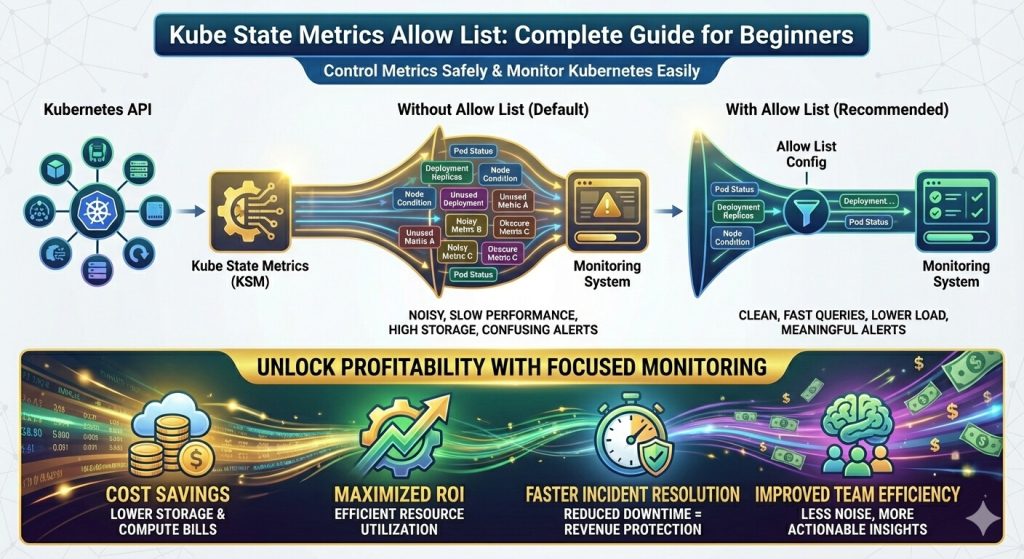
What Is Kube State Metrics
Kube state metrics is a tool that reads data from the Kubernetes API. It converts that data into simple metrics. These metrics help us understand the state of Kubernetes resources.
It shows information about pods, nodes deployments and more. It does not monitor CPU or memory directly. It shows what exists and what status it has.
I think this tool is very useful for cluster health monitoring.
What Is Kube State Metrics Allow List
This helps reduce noise. It also improves performance. It keeps monitoring clean and focused.
I learned that an allowed list is better than collecting everything. It gives us control.
Why Allow List Is Important
Allow list helps in many ways. It reduces memory usage. It reduces storage usage. It improves query speed. It avoids alert confusion.
If we do not use the allow list then all metrics are exported.
My Personal Experience With Allow List
When I first installed kube state metrics I did not configure the allow list. I thought the default settings were fine.
Then I learned about the allow list. I selected only the metrics I needed. The difference was huge. The system became faster. Alerts became meaningful. Monitoring felt under control.
That is why I always recommend an allow list to beginners.
How Allow List Works
Allow list works by selecting metric names.
If a metric is not listed then it is ignored. This makes the exporter lighter.
We should only allow metrics that are useful. This depends on what we want to monitor. If we care about deployments then allow deployment metrics. If we care about pods then allow pod metrics.
Common Metrics People Allow
Most users allow metrics related to pods. They allow metrics related to deployments. They allow metrics related to nodes.
These metrics help track application health. They help detect failures early.
I suggest starting small. Add more metrics only if needed.
How To Decide Which Metrics To Allow
First, think about your goal. What do you want to monitor?
If you want uptime then allow pod status metrics. If you want rollout safety then allow deployment metrics.
Allow metrics that answer real questions. This mindset changed how I monitor clusters.
Allow List And Security
Allow list also improves security. It reduces exposed information.
If fewer metrics are exposed then less data is visible. This reduces risk.
In production clusters this is very important. I always use the allow list for production.
Allow List And Performance
Performance improvement is one of the biggest benefits.
Less metrics means less load. Less load means faster queries. Faster queries mean better dashboards.
I noticed dashboards loading much faster after allowing list setup. This helped my team trust monitoring again.
Best Practices For Beginners
Start with a small allow list. Test monitoring behavior. Add metrics slowly.
Review metrics regularly. Remove unused ones.
This keeps monitoring clean. It keeps systems healthy.
SEO And Monitoring Connection
Good monitoring improves uptime. Better uptime improves user experience.
Search engines notice stable websites. Stable websites rank better.
So monitoring indirectly helps SEO. Allow list helps monitoring quality.
FAQs
What is the kube state metrics allow list?
It is a method to select which metrics are exposed by kube state metrics.
Is an allow list required?
It is not required but highly recommended for performance and clarity.
Can beginners use an allow list?
Yes, beginners should use it to avoid confusion.
Does allowing lists improve performance?
Yes it reduces load and speeds up monitoring tools.
Is the allow list safe for production?
Yes it is best practice for production clusters.
Conclusion
I think the kube state metrics allow list is one of the most important features for clean Kubernetes monitoring. With it monitoring becomes focused and useful.
From my experience, allowing a list saves time improves performance and reduces stress. Beginners should learn it early. It makes Kubernetes monitoring easier and more reliable.
If we choose metrics wisely then systems stay healthy. Users stay happy. Teams work confidently. That is why kube state metrics allow list matters so much.