
I think when we start learning Kubernetes, it can feel confusing. There are so many tools and terms like kube state metrics and Grafana dashboards. Later I learned that kube state metrics combined with Grafana dashboards makes monitoring visual and easy. In this guide I will share my personal experience and explain step by step how beginners can use these tools. We will see why dashboards are important, how to set them up and what mistakes to avoid. If we follow this guide correctly our Kubernetes clusters will be more stable and easier to manage.
What Is Kube State Metrics
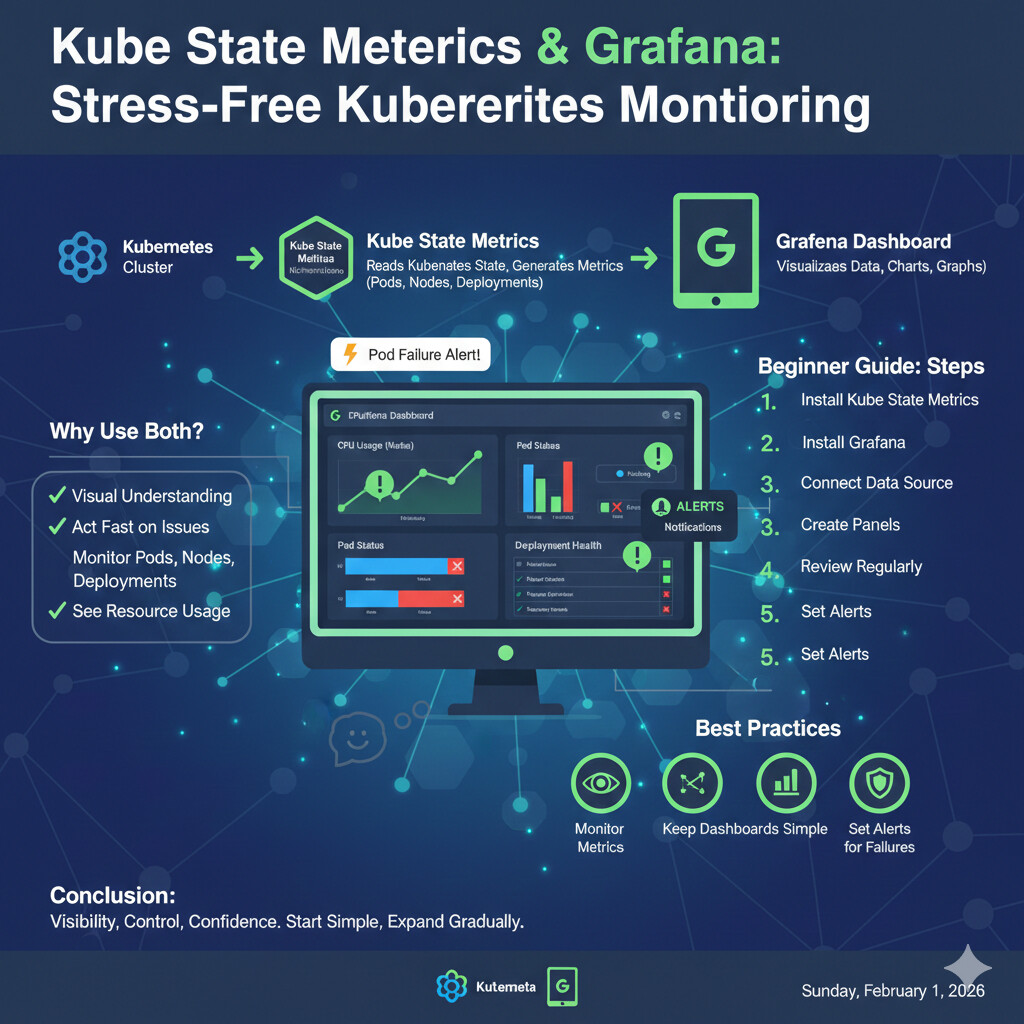
Kube state metrics is a service that reads the state of Kubernetes objects. It watches resources like pods, nodes , deployments and namespaces. It creates metrics from their status. These metrics show us what is running, what is failing and what needs attention.
I did not know why. That solved my problem fast.
What Is Grafana Dashboard
Grafana is a tool that makes dashboards. Dashboards are visual charts, graphs and tables. They show metrics in a way that is easy to understand. We can connect Grafana to kube state metrics. Then we can see pods, nodes deployments and resource usage visually.
When I first connected Grafana to kube state metrics I was amazed. Suddenly I could see the entire cluster on one screen. That made monitoring simple and gave confidence that the cluster was healthy.
Why Use Kube State Metrics With Grafana
If we use kube state metrics alone we get numbers in text. That is useful but not easy to understand. Grafana turns these numbers into visuals. That is why we use both together.
We can see Which pods are running Which nodes are ready Which deployments are failing Resource usage trends
That helps us act fast if something goes wrong.
Personal Experience With Dashboards
I immediately fixed the issue. Without the dashboard I would have spent hours searching. That taught me dashboards are not decoration, they are problem solvers.
Installing Kube State Metrics
To use kube state metrics we need a running Kubernetes cluster.
We should follow these steps Install kube state metrics service Expose metrics endpoint Verify metrics using kubectl
When I first installed it I made a mistake with permissions. If we are careful about roles, metrics will work fine.
Installing Grafana
Grafana can run as a pod inside Kubernetes or outside.
Steps I followed Download Grafana Create a dashboard service Connect data source to kube state metrics
Once setup is complete we can start creating visual dashboards.
Creating Dashboards Step By Step
Step one select data source as kube state metrics Step two add a panel Step three choose metric like pod status or node health Step four create graph or table Step five save dashboard
We should test dashboards to see if metrics update correctly.
Understanding Metrics
Kube state metrics give us metrics like Pod status Deployment replicas Node conditions Namespace usage
If we understand these numbers we can prevent downtime.
Best Practices
Monitor only important metrics Keep dashboards simple Set alerts for failures Review metrics regularly
I learned that too many metrics confuse beginners. Simple dashboards work best.
Alerts And Notifications
Grafana can send alerts if metrics cross limits.
Example Pod not running Node not ready Deployment failed
If we receive alerts we can act fast. That saves time and prevents downtime.
How Dashboards Help Teams
Teams can see cluster health at a glance. Everyone can understand metrics visually. That improves teamwork and speeds up problem solving.
Performance Tips
Use few panels per dashboard Avoid heavy queries Update dashboards at reasonable intervals
This keeps Grafana fast and responsive.
Real World Example
The dashboard showed which node failed and why. We fixed it immediately. Without the dashboard it would have taken hours.
Future Of Kubernetes Monitoring
Monitoring is becoming automated. Dashboards will remain key. Metrics will guide scaling resource allocation and stability. Kube state metrics with Grafana fits perfectly in this future.
FAQs
What is the kube state metrics grafana dashboard?
It is a setup where kube state metrics provides Kubernetes metrics and Grafana displays them visually
Is it hard for beginners?
No it is easy if we follow step by step guides and understand metrics
Why use Grafana with kube state metrics?
Grafana makes raw metrics visual and easy to understand for monitoring
Can we monitor pods, nodes and deployments?
Yes kube state metrics gives metrics for all these and Grafana shows them
Should small clusters use dashboards?
Yes even small clusters benefit from visual monitoring and alerts
Conclusion
Kube state metrics Grafana dashboard is more than a tool. It gives visibility, control and confidence. I learned that using dashboards reduces guesswork. If we set dashboards correctly our clusters stay healthy, stable and easy to manage. Beginners should start simple and expand gradually.
Dashboards are not just visuals, they solve real problems and improve user experience.